
How to Remove Chewing Gum From Carpets and Upholstery Without Damaging the Fabric
Quick Summary
Chewing gum can often be removed from carpets and upholstery by hardening it first and carefully lifting away as much as possible. The biggest risks come from scraping too aggressively, applying an unsuitable solvent or soaking the affected area. Delicate fabrics, wool carpets, valuable rugs and stubborn residue are better treated professionally rather than repeatedly experimenting with household products.
Finding chewing gum pressed into a carpet, rug or sofa is frustrating, but acting carefully is more important than acting quickly. Unlike a liquid spill, chewing gum can become worked into fibres as people walk or sit on it. Trying to pull it away while it is still soft can stretch fibres, spread the residue or make the affected area much larger. The aim is therefore to remove the gum without damaging the material underneath.
Why is chewing gum difficult to remove from carpets and upholstery?
Chewing gum becomes more difficult to deal with when it is warm and flexible. Rather than lifting cleanly, it can stretch and cling to individual carpet or upholstery fibres.
Problems become more likely when:
- the gum has been walked into a carpet
- it has been pressed into upholstery
- the material has a deep or textured pile
- heat has softened the gum
- an unsuitable cleaning product has already been applied
- repeated scraping has disturbed the fibres
This is why the safest first step is normally to make the gum easier to remove mechanically before attempting to treat any mark left behind.
1. Remove anything that will lift away easily
Start by assessing how firmly the gum is attached.
If a part of it is sitting above the surface, you may be able to lift away some of the excess carefully. Avoid pulling hard at carpet fibres or upholstery threads.
A blunt-edged tool may help, but it should be used gently and almost parallel to the surface rather than digging down into the material.
The goal at this stage is not necessarily to remove every trace. It is simply to take away loose material without creating additional damage.
2. Harden the chewing gum before trying to remove more
Cooling chewing gum can make it firmer and less sticky, which may allow more of it to break away.
For an item that cannot be placed into a freezer, such as a fitted carpet or sofa, a sealed bag containing ice can be held against the affected area.
A few practical points matter:
- Keep water from melting ice away from the fabric where possible.
- Do not press the gum further into the fibres.
- Wait until it becomes noticeably harder before attempting to lift it.
- Work gradually rather than trying to remove everything in one movement.
If the gum begins to soften again, stop and cool it before continuing.
When should you be particularly careful?
Not every carpet or piece of furniture should be treated in exactly the same way.
Take extra care with:
- wool carpets
- delicate rugs
- velvet or other specialist upholstery
- materials with unstable dyes
- antique or valuable furniture
- loose or damaged fibres
- items where the manufacturer specifies particular cleaning requirements
If you do not know what the material is made from, experimenting with several different stain removers can create a bigger problem than the gum itself.
3. Deal with the residue separately
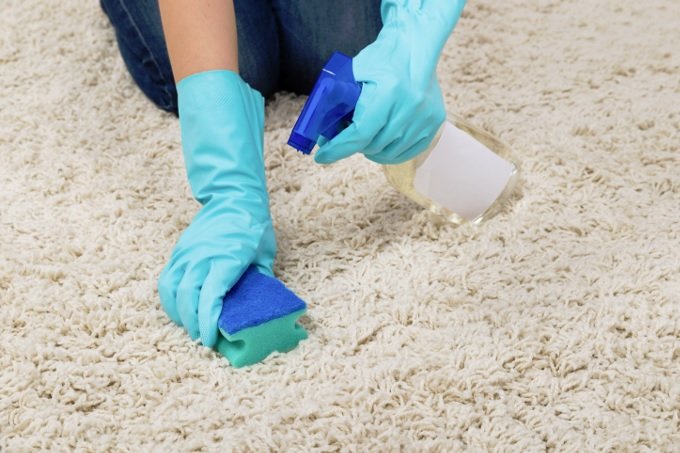
Even after the solid chewing gum has been removed, a sticky or slightly discoloured mark may remain. This is a separate problem from removing the gum itself.
Before using any cleaning product, check that it is suitable for the material and follow the manufacturer’s instructions. If appropriate, test it somewhere inconspicuous first.
The safest approach is to:
- Apply only a small amount of suitable product.
- Blot rather than scrub.
- Avoid saturating the carpet or upholstery.
- Work patiently and assess the result before applying more.
- Stop if you notice colour transfer, fibre distortion or another unexpected reaction.
Repeatedly adding different household remedies can make professional stain removal more difficult later.
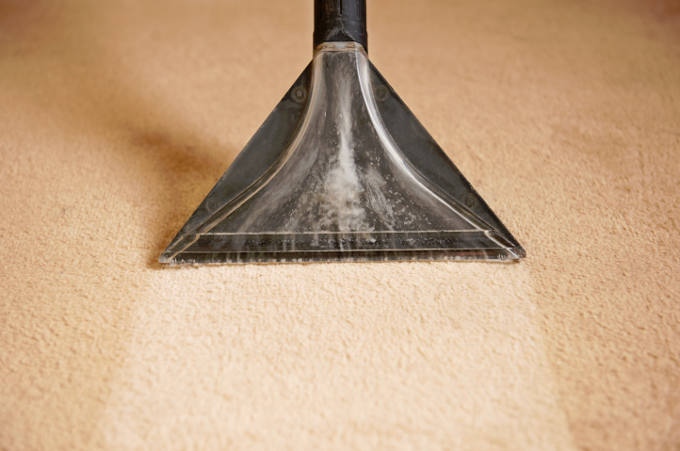
For carpets that require deeper treatment, Apple Clean also provides professional carpet cleaning.
Common chewing gum removal mistakes to avoid
Scraping too aggressively
Hard scraping can pull or damage carpet fibres and may leave a visibly rough area after the gum has gone.
Using heat
Heating the gum can make it softer and encourage it to spread further into the material.
Reaching immediately for a strong solvent
A product capable of dissolving sticky residue may also affect colour, backing materials or finishes. Strong does not necessarily mean suitable.
Soaking the area
Using excessive amounts of water or cleaning solution can spread the affected area and create drying problems.
Trying one household remedy after another
Mixing methods makes it harder to predict how the material will react and can leave several different residues behind.
When is professional chewing gum removal the safer option?
Professional treatment is worth considering when:
- the gum is deeply embedded
- a large area is affected
- previous DIY attempts have left residue
- the carpet or upholstery is valuable or delicate
- you are unsure what the material is
- the area has changed colour
- the fibres are beginning to distort
- the gum has been present for some time
A professional cleaner can assess both the contaminant and the material before selecting an appropriate treatment. That is particularly important where the priority is not simply getting the gum off, but getting it off without leaving permanent evidence that it was ever there.
If chewing gum or another stubborn stain is proving difficult to remove from your carpet, rug or upholstery, contact Apple Clean for specialist advice.